Gimnasio ATP
A management app for a gym in Bahía Blanca — payments, members and routines, from the front desk to every member’s phone.
The brief
Gimnasio ATP ran on a Visual FoxPro desktop program from the early 2000s: one computer at the front desk, data in DBF files and payments in a separate program. It worked, but only from that computer, and members had no way to see their own routine or account.
The product
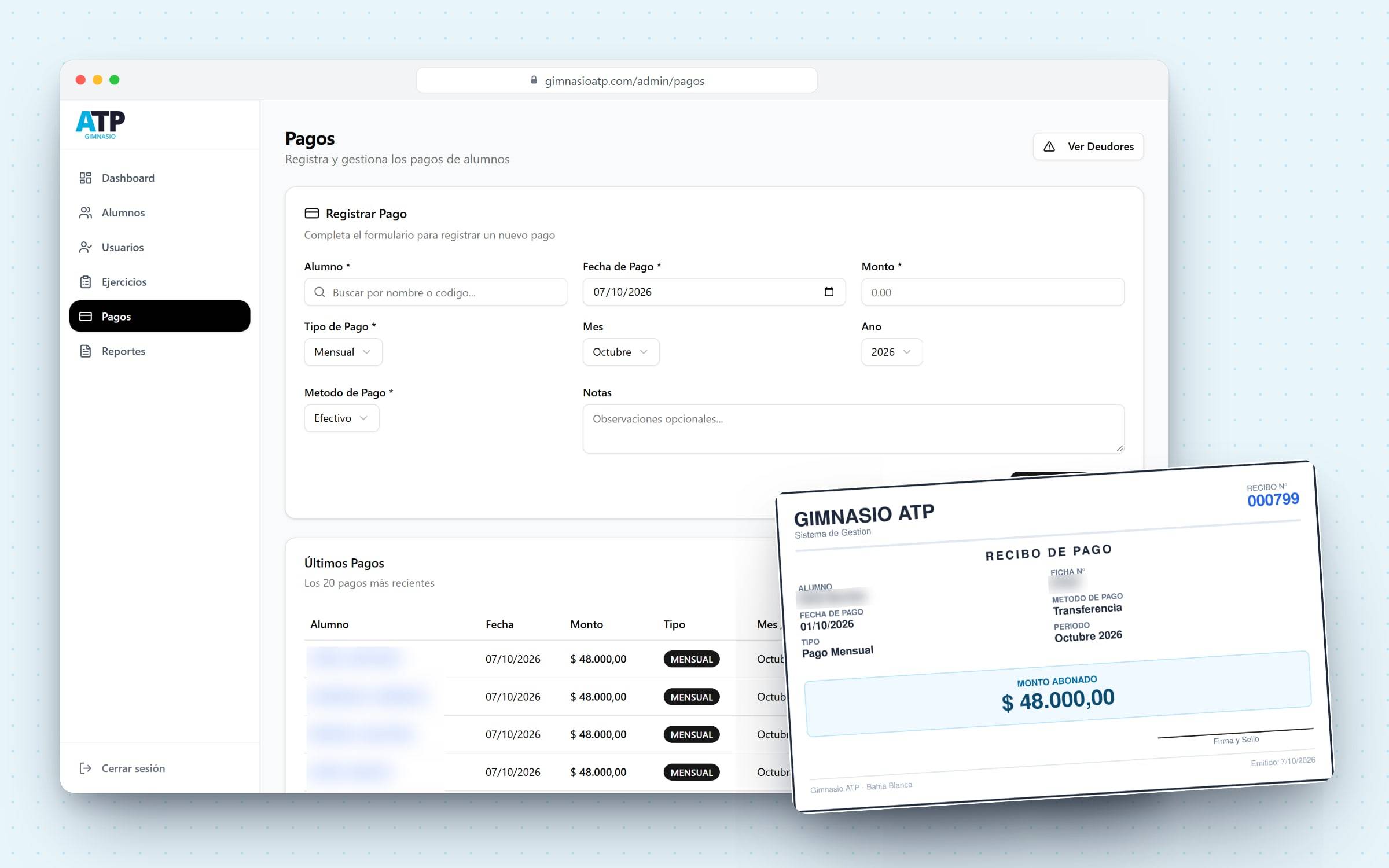
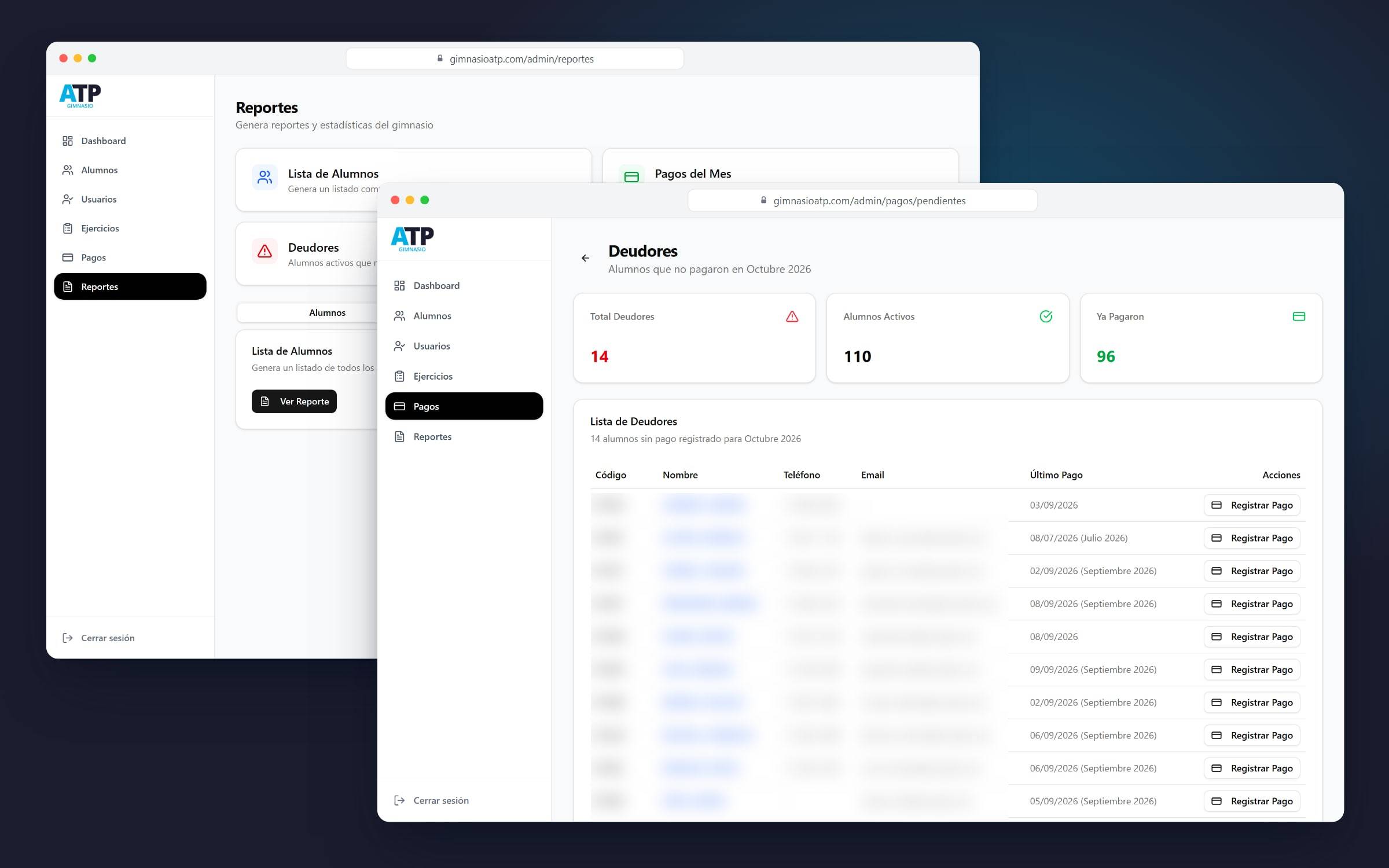
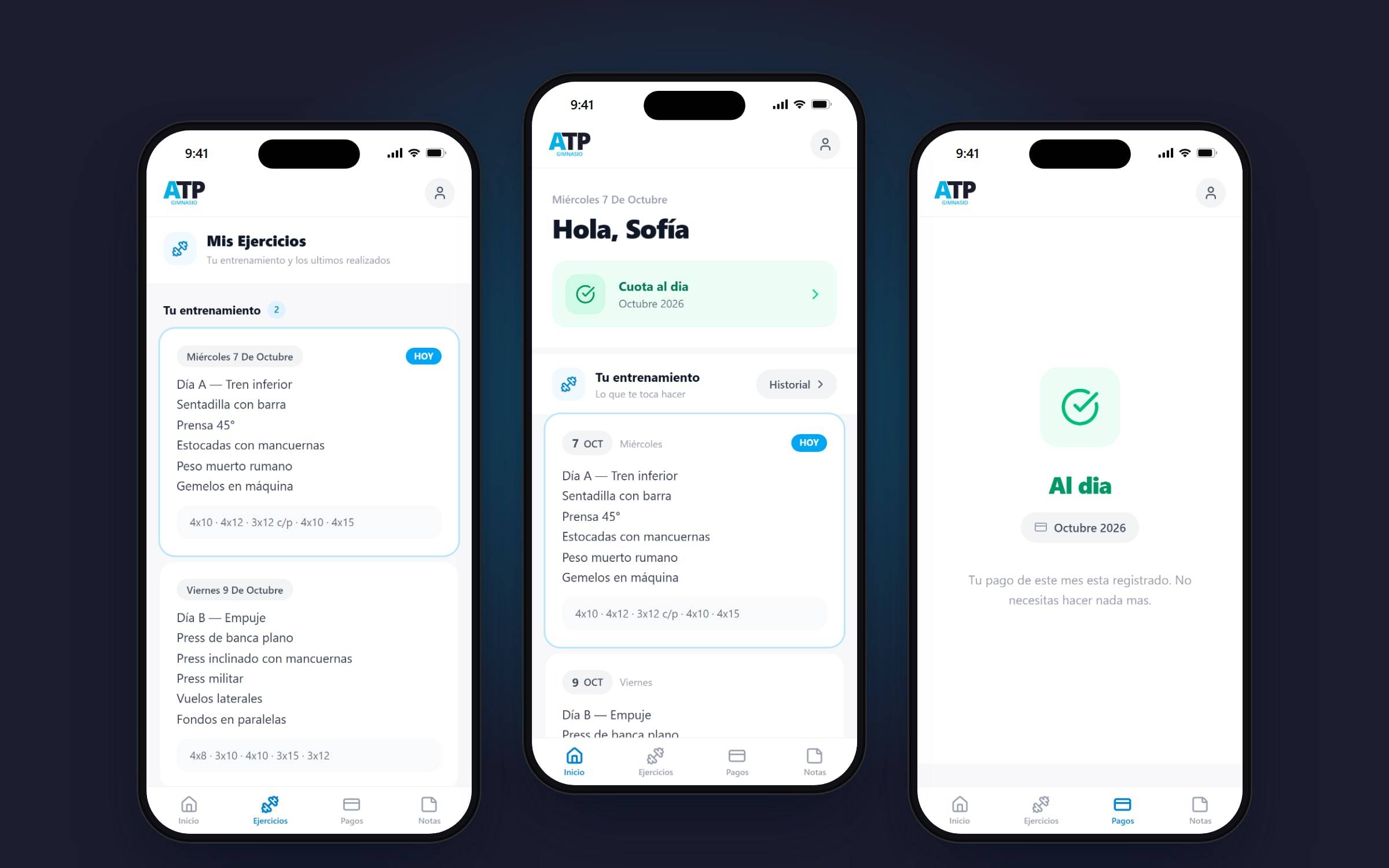
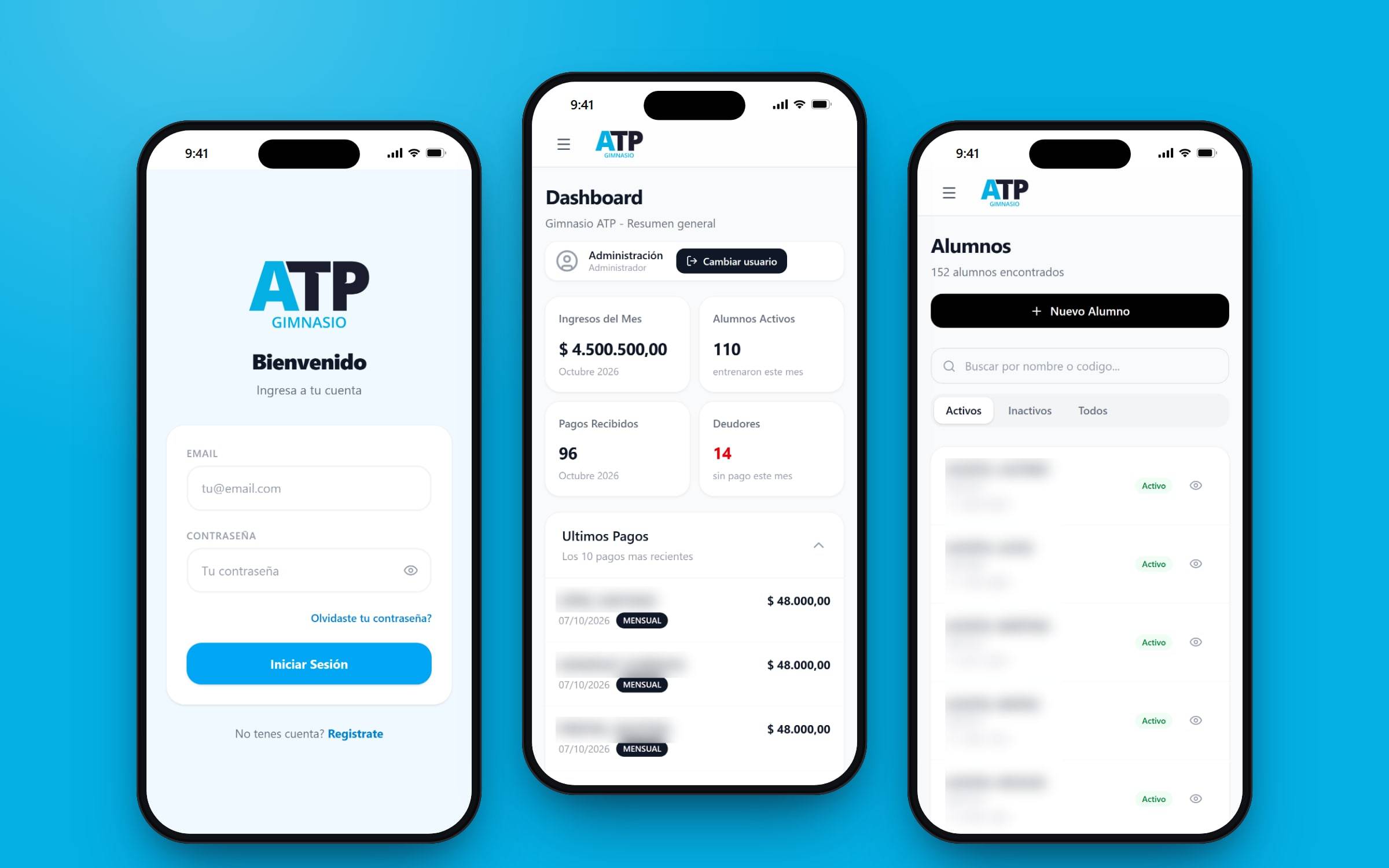
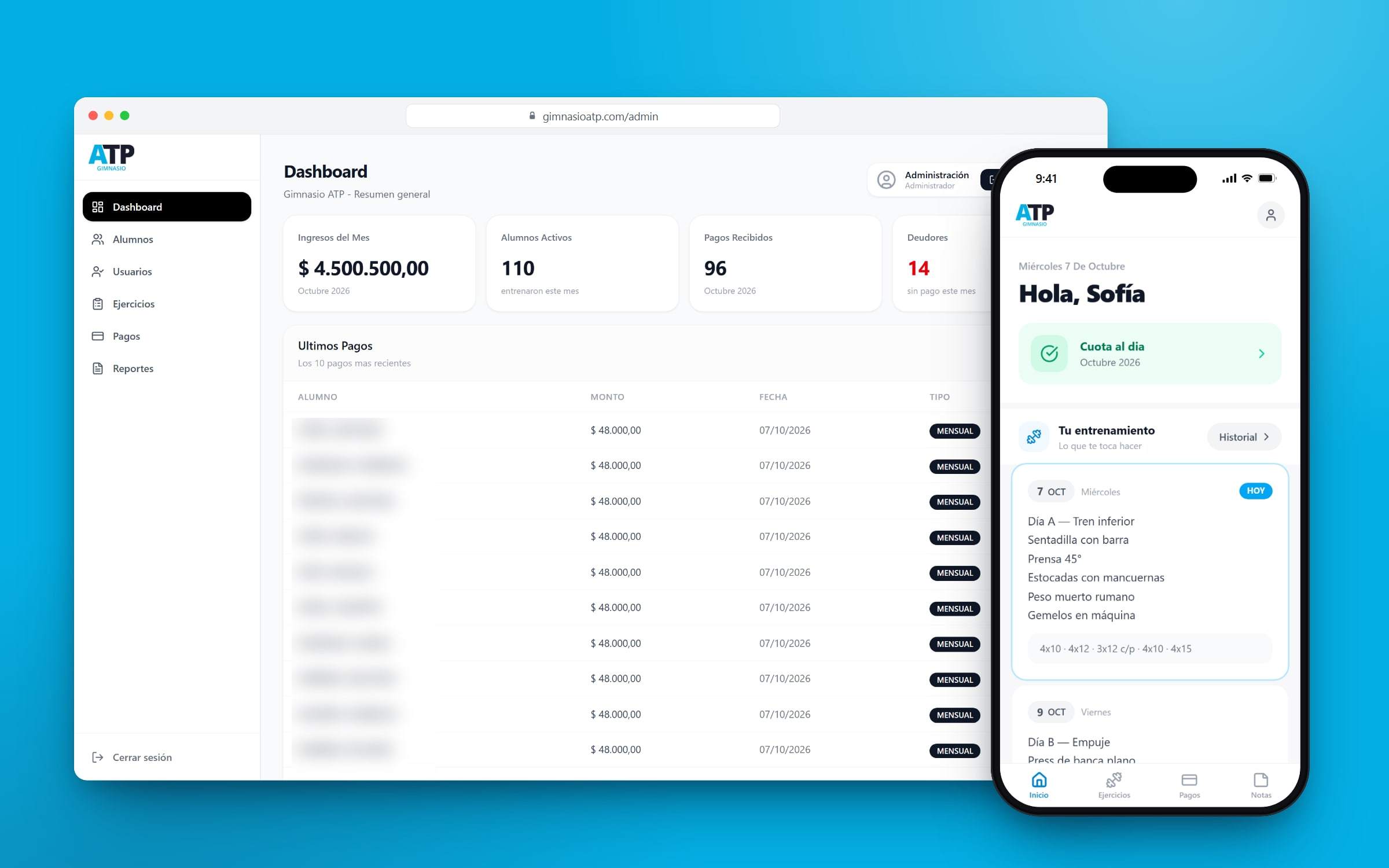
I designed and built a web app that works on any device and can be added to the phone’s home screen like an app. It has three roles. The administrator sees everything, including the money: income for the month, payments received and who owes. Trainers get the day-to-day — members, routines and payments — without the financial figures. And every member has their own app with today’s routine, recent sessions, personal notes and whether they’re paid up.
At the front desk a payment takes seconds — monthly or for a partial period, in cash, by transfer or by card — and the app issues a numbered PDF receipt. Debtors are counted the way the owner actually thinks about them: anyone who trained this month and hasn’t paid for it. On the shared front-desk computer, staff switch users from a small dialog instead of going back to the sign-in screen.
The migration
Nothing was left behind. A migration script read the old DBF files and moved every member — some 7,400 records — together with their payments, routines, provinces and towns into the new database.
The build
Next.js and React with TypeScript, PostgreSQL through Prisma, role-based sign-in, Tailwind with Radix components, PDF receipts generated on the server and email verification for new accounts. It runs in production on Vercel and kept evolving with the client for five months — more than fifty updates, from the debtors model to a restricted role for trainers.
Every screen here shows invented demo data, and names and contact details are blurred — no real member information.